Mostrando entradas con la etiqueta Poemas en inglés. Mostrar todas las entradas

sábado, 31 de diciembre de 2022

#365 Year's End (Richard Wilbur)

Cuando empecé con blog ya tenía en mente terminar con este poema de Richard Wilbur que leí el año pasado. Entonces no sabía prácticamente nada de Wilbur, y apenas había leído un par de poemas. Pero este año la biblioteca de mi universidad, que es lo más parecido que he tenido a un lámpara de Aladín, ha comprado, a mi petición, la serie documental sobre Richard Wilbur, "Richard Wilbur and the Things of This World". Nueve horas y media de entrevistas a Wilbur y otros poetas sobre su vida y obra. Una gozada. Es un proyecto más bien casero. La calidad de los vídeos y la edición es más bien pobre, pero el contenido es de primera calidad y logra dar una imagen muy completa del gran poeta, impecable traductor (especialmente de Molière y Racine) y extraordinaria persona (padre, esposo, profesor, amigo) que era Richard Wilbur. 

El poeta que da título al documental es uno de mis favoritos, "Love Calls Us to the Things of This World"En el documental Wilbur lee y comenta varios de sus poemas. Este, dedicado a su hija adolescente, es una maravilla: "The Writer".

El de hoy es una buena meditación para terminar el año y cerrar con puertas doradas este jardín. ¡Gracias nuevamente por la compañía!


(via)

YEAR'S END

Now winter downs the dying of the year,   
And night is all a settlement of snow;
From the soft street the rooms of houses show   
A gathered light, a shapen atmosphere,   
Like frozen-over lakes whose ice is thin   
And still allows some stirring down within.

I’ve known the wind by water banks to shake
The late leaves down, which frozen where they fell   
And held in ice as dancers in a spell   
Fluttered all winter long into a lake;   
Graved on the dark in gestures of descent,   
They seemed their own most perfect monument.

There was perfection in the death of ferns   
Which laid their fragile cheeks against the stone   
A million years. Great mammoths overthrown   
Composedly have made their long sojourns,   
Like palaces of patience, in the gray
And changeless lands of ice. And at Pompeii

The little dog lay curled and did not rise   
But slept the deeper as the ashes rose
And found the people incomplete, and froze   
The random hands, the loose unready eyes   
Of men expecting yet another sun
To do the shapely thing they had not done.

These sudden ends of time must give us pause.   
We fray into the future, rarely wrought
Save in the tapestries of afterthought.
More time, more time. Barrages of applause   
Come muffled from a buried radio.
The New-year bells are wrangling with the snow.

jueves, 29 de diciembre de 2022

#363 Christmas Carol (Sara Teasdale)

(via)

CHRISTMAS CAROL

The kings they came from out the south,
   All dressed in ermine fine;
They bore Him gold and chrysoprase,
   And gifts of precious wine.
 
The shepherds came from out the north,
   Their coats were brown and old;
They brought Him little new-born lambs—
   They had not any gold.
 
The wise men came from out the east,
   And they were wrapped in white;
The star that led them all the way
   Did glorify the night.
 
The angels came from heaven high,
   And they were clad with wings;
And lo, they brought a joyful song
   The host of heaven sings.
 
The kings they knocked upon the door,
   The wise men entered in,
The shepherds followed after them
   To hear the song begin.
 
The angels sang through all the night
   Until the rising sun,
But little Jesus fell asleep
   Before the song was done.

miércoles, 28 de diciembre de 2022

#362 Christ's Nativity (Henry Vaughan)

(via)

CHRIST'S NATIVITY

Awake, glad heart! get up and sing!
It is the birth-day of thy King.
Awake! awake!
The Sun doth shake
Light from his locks, and all the way
Breathing perfumes, doth spice the day.

Awake, awake! hark how th’ wood rings;
Winds whisper, and the busy springs
A concert make;
Awake! awake!
Man is their high-priest, and should rise
To offer up the sacrifice.

I would I were some bird, or star,
Flutt’ring in woods, or lifted far
Above this inn
And road of sin!
Then either star or bird should be
Shining or singing still to thee.

I would I had in my best part
Fit rooms for thee! or that my heart
Were so clean as
Thy manger was!
But I am all filth, and obscene;
Yet, if thou wilt, thou canst make clean.

Sweet Jesu! will then. Let no more
This leper haunt and soil thy door!
Cure him, ease him,
O release him!
And let once more, by mystic birth,
The Lord of life be born in earth.

lunes, 26 de diciembre de 2022

#360 Star of the Nativity (Joseph Brodsky)


(via)

STAR OF THE NATIVITY

In the cold season, in a locality accustomed to heat more than
to cold, to horizontality more than to a mountain,
a child was born in a cave in order to save the world;
it blew as only in deserts in winter it blows, athwart.

To Him, all things seemed enormous: His mother’s breast, the steam
out of the ox’s nostrils, Caspar, Balthazar, Melchior—the team
of Magi, their presents heaped by the door, ajar.
He was but a dot, and a dot was the star.

Keenly, without blinking, through pallid, stray
clouds, upon the child in the manger, from far away—
from the depth of the universe, from its opposite end—the star
was looking into the cave. And that was the Father’s stare.

domingo, 25 de diciembre de 2022

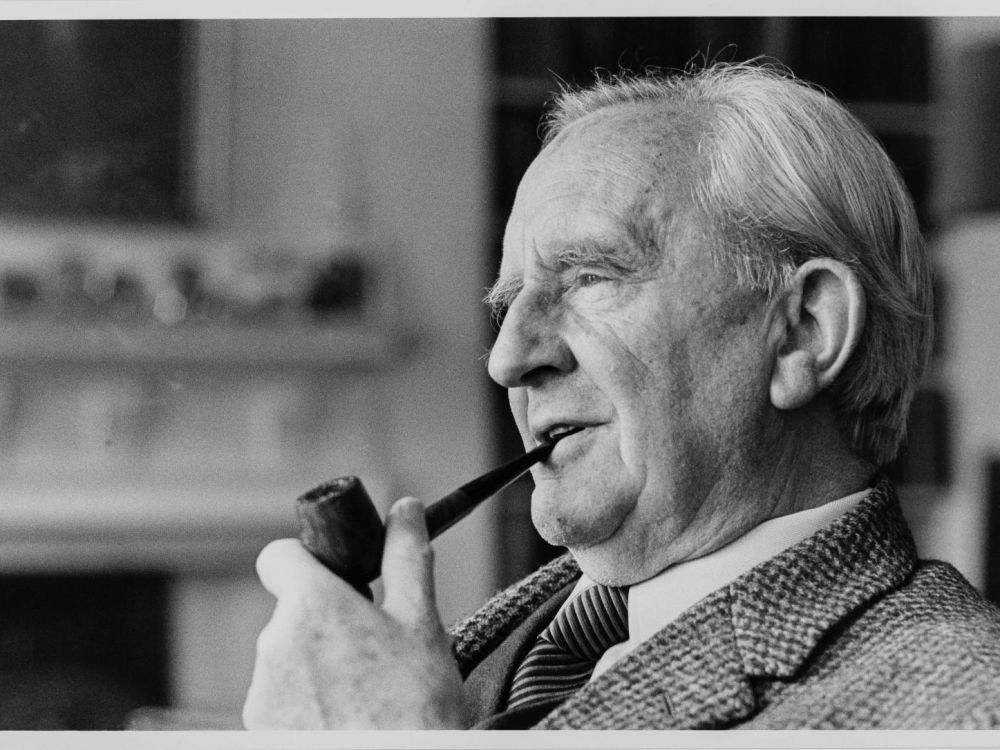
#359 Noel (J.R.R. Tolkien)

¡Feliz Navidad!

(via)
 

NOEL

Grim was the world and grey last night:
The moon and stars were fled,
The hall was dark without song or light,
The fires were fallen dead.
The wind in the trees was like to the sea,
And over the mountains' teeth
It whistled bitter-cold and free,
As a sword leapt from its sheath.

The lord of snows upreared his head;
His mantle long and pale
Upon the bitter blast was spread
And hung o'er hill and dale.
The world was blind, the boughs were bent,
All ways and paths were wild:
Then the veil of cloud apart was rent,
And here was born a Child.

The ancient dome of heaven sheer
Was pricked with distant light;
A star came shining white and clear
Alone above the night.
In the dale of dark in that hour of birth
One voice on a sudden sang:
Then all the bells in Heaven and Earth
Together at midnight rang.

Mary sang in this world below:
They heard her song arise
O'er mist and over mountain snow
To the walls of Paradise,
And the tongue of many bells was stirred
in Heaven's towers to ring
When the voice of mortal maid was heard,
That was mother of Heaven's King.

Glad is the world and fair this night
With stars about its head,
And the hall is filled with laughter and light,
And fires are burning red.
The bells of Paradise now ring
With bells of Christendom,
And Gloria, Gloria we will sing
That God on earth is come. 

viernes, 23 de diciembre de 2022

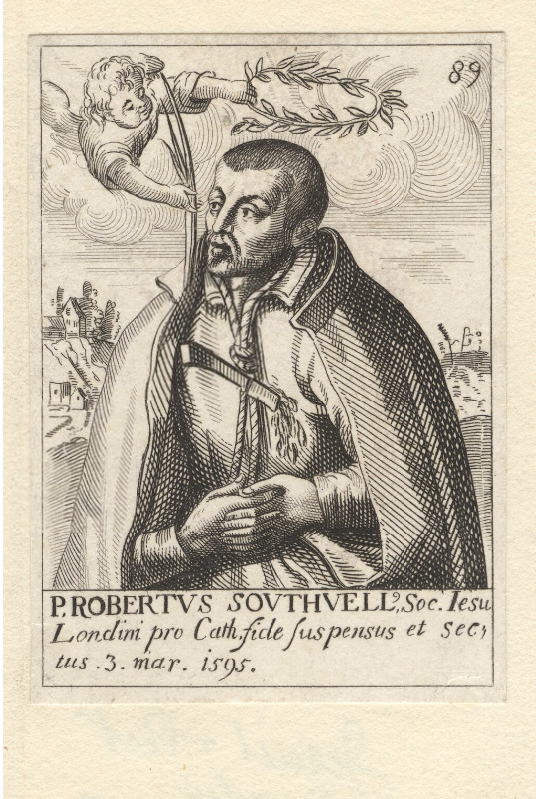
#357 The Burning Babe (Robert Southwell)

(via)

THE BURNING BABE

As I in hoary winter’s night stood shivering in the snow,
Surpris’d I was with sudden heat which made my heart to glow;
And lifting up a fearful eye to view what fire was near,
A pretty Babe all burning bright did in the air appear;
Who, scorched with excessive heat, such floods of tears did shed
As though his floods should quench his flames which with his tears were fed.
“Alas!” quoth he, “but newly born, in fiery heats I fry,
Yet none approach to warm their hearts or feel my fire but I!
My faultless breast the furnace is, the fuel wounding thorns,
Love is the fire, and sighs the smoke, the ashes shame and scorns;
The fuel Justice layeth on, and Mercy blows the coals,
The metal in this furnace wrought are men’s defiled souls,
For which, as now on fire I am to work them to their good,
      So will I melt into a bath to wash them in my blood.”
      With this he vanish’d out of sight and swiftly shrunk away,
      And straight I called unto mind that it was Christmas day.

miércoles, 21 de diciembre de 2022

#355 Applesauce (Ted Kooser)

El primer poemario de Ted Kooser que leí me pareció deslumbrante. De ahí llegué a su libro sobre el arte de escribir poemas, en cuyo título está encerrado gran parte de la poética Kooseriana, que es algo más bien de andar por casa: "The Poetry Home Repair Manual: Practical Advice for Beginning Poets". Es un libro estupendo tanto para poetas como para amantes de la poesía. 

Hay una sección, la que más recuerdo, en la que cita a Seamus Heaney hablando de la tarea del poeta: "The aim of the poet and the poetry is finally to be of service, to ply the effort of the individual work into the larger work of the community as a whole". Kooser concreta un poco más en qué consiste ese servicio. Los mejores poemas son aquellos que nos ayudan a percibir la realidad de otra manera, quizá de una manera un poco más fresca, un ángulo inesperado, o quizá de una manera completamente nueva. Es lo que hace Kooser constantemente en sus poemas.

***

Una vez le pidieron a Kooser que escribiera un poema para acompañar un libro de arte que finalmente nunca salió a la luz. El poema que Kooser envió era el siguiente:

If you can awaken
inside the familiar
and discover it strange,
you need never leave home.

Y una vez comentó: "This four-line poem is a kind of credo for me. In short, we have beauty all about us, if we take the time to pay attention to it. Reinhold Marxhausen knew about paying attention; George Ault knew it. Pablo Neruda wrote dozens of remarkable poems about common things. Thousands of poets and painters have learned to pay attention like this. We honor the ordinary by giving it our attention. We enshrine the ordinary in our art. Is there anything really ordinary, I wonder." (Otros poetas concuerdan).

***

Como en esta época Navideña suele haber mucha gente rodeando la cocina, pongo un poema que me hizo ver con una admiración nueva a todos los que hacen con primor sus recetas, envueltos en conversaciones con sus ingredientes, sumidos en otro mundo que ellos mismos van creando. 


APPLESAUCE

I liked how the starry blue lid
of that saucepan lifted and puffed,
then settled back on a thin
hotpad of steam, and the way
her kitchen filled with the warm,
wet breath of apples, as if all
the apples were talking at once,
as if they’d come cold and sour
from chores in the orchard,
and were trying to shoulder in
close to the fire. She was too busy
to put in her two cents’ worth
talking to apples. Squeezing
her dentures with wrinkly lips,
she had to jingle and stack
the bright brass coins of the lids
and thoughtfully count out
the red rubber rings, then hold
each jar, to see if it was clean,
to a window that looked out
through her back yard into Iowa.
And with every third or fourth jar
she wiped steam from her glasses,
using the hem of her apron,
printed with tiny red sailboats
that dipped along with leaf-green
banners snapping, under puffs
or pale applesauce clouds
scented with cinnamon and cloves,
the only boats under sail
for at least two thousand miles.

lunes, 19 de diciembre de 2022

#353 Those Winter Sundays (Robert Hayden)


(via)

THOSE WINTER SUNDAYS


Sundays too my father got up early

and put his clothes on in the blueblack cold,

then with cracked hands that ached

from labor in the weekday weather made

banked fires blaze. No one ever thanked him.


I’d wake and hear the cold splintering, breaking.

When the rooms were warm, he’d call,

and slowly I would rise and dress,

fearing the chronic angers of that house,


Speaking indifferently to him,

who had driven out the cold

and polished my good shoes as well.

What did I know, what did I know

of love’s austere and lonely offices?

sábado, 17 de diciembre de 2022

#351Tyger (William Blake)


(Ilustración del mismo William Blake)

THE TYGER


Tyger Tyger, burning bright, 

In the forests of the night; 

What immortal hand or eye, 

Could frame thy fearful symmetry?


In what distant deeps or skies. 

Burnt the fire of thine eyes?

On what wings dare he aspire?

What the hand, dare seize the fire?


And what shoulder, & what art,

Could twist the sinews of thy heart?

And when thy heart began to beat.

What dread hand? & what dread feet?


What the hammer? what the chain,

In what furnace was thy brain?

What the anvil? what dread grasp.

Dare its deadly terrors clasp?


When the stars threw down their spears 

And water'd heaven with their tears:

Did he smile his work to see?

Did he who made the Lamb make thee?


Tyger Tyger burning bright,

In the forests of the night:

What immortal hand or eye,

Dare frame thy fearful symmetry?

jueves, 15 de diciembre de 2022

#349 I Sought the Wood in Winter (Willa Cather)

(via)

I SOUGHT THE WOOD IN WINTER

I sought the wood in summer
             When every twig was green;
The rudest boughs were tender,
            And buds were pink between.
Light-fingered aspens trembled
            In fitful sun and shade,
And daffodils were golden
            In every starry glade.
The brook sang like a robin—
            My hand could check him where
The lissome maiden willows
            Shook out their yellow hair.

“How frail a thing is Beauty,”
            I said, “when every breath
She gives the vagrant summer
            But swifter woos her death.
For this the star dust troubles,
            For this have ages rolled:
To deck the wood for bridal
            And slay her with the cold.”

I sought the wood in winter
            When every leaf was dead;
Behind the wind-whipped branches
            The winter sun set red.
The coldest star was rising
            To greet that bitter air,
The oaks were writhen giants;
            Nor bud nor bloom was there.
The birches, white and slender,
            In deathless marble stood,
The brook, a white immortal,
            Slept silent in the wood.

“How sure a thing is Beauty,”
            I cried. “No bolt can slay,
No wave nor shock despoil her,
            No ravishers dismay.
Her warriors are the angels
            That cherish from afar,
Her warders people Heaven
            And watch from every star.
The granite hills are slighter,
            The sea more like to fail;
Behind the rose the planet,
            The Law behind the veil.”

lunes, 12 de diciembre de 2022

#346 The Hymn of Juan Diego (James Matthew Wilson)

En la fiesta de la Patrona de las Américas:

(via)
 

THE HYMN OF JUAN DIEGO

Thus it is said that Juan Diego

Saw first the Aztec girl,

Her shoulders cloaked in starry mantle

Her hair dark as the merle.


The hill whereon she stood had been

An ancient mother’s home,

Laid low with all Tenochtitlan

When stout Cortez had come.


Light sprang from dull rocks at her feet

And birdsong filled the place,

While she herself eclipsed the sun,

Its blaze about her face.


And every color of the stones

For which the Spaniards killed

Became the turquoise and the gold

With which the sky was filled.


“All those who seek me, Little One,

Will have me for their mother;

And those by pride or greed estranged

Will someday call you brother.”


Juan begged the bishop build a church,

Received a doubtful smile;

And felt his own unworthy bones

As ignorant and vile.


The bishop’s jeweled servants scorned him,

Said he was telling lies.

A second time the bishop’s asked,

A second time denies.


Some thought to beat Juan for his words;

He found his uncle ill,

So every claim upon him led

Him to avoid her will.


But she met him upon the way:

“Why do you run from me?

My mantle covers you already,

And sets your uncle free.”


“Gather these roses in your cloak

As your land’s never seen,

Then, lay them at the holy feet,

And he’ll know what they mean.”


The brute crowd at the bishop’s door

Stood in his way and sneered.

They saw his breast of flowers and snatched;

The petals disappeared.


So, Juan Diego was let in

To stand before the throne,

To show his harvest of the rose

Where rose had never grown.


“I’ve done as she, the mother of God

Told me to do,” he said,

And poured out at the bishop’s feet

The bright abundant red.


But, as these fell, the bishop saw

Juan’s rough-stitched cloak unfold

The image of that placid queen

Ablaze with teal and gold.


He fell upon his knees in praise

And wept for love of her

Who on that land of rock and thorn

Her great care should confer.


Beneath her mantle and her banner

All those vast lands are warmed,

But what we seek in them must be

First by her love transformed.


And so, Diego’s cloak poured forth

Not conquest but sweet flowers

And Mary chose a tattered cloth

To first unveil her powers.